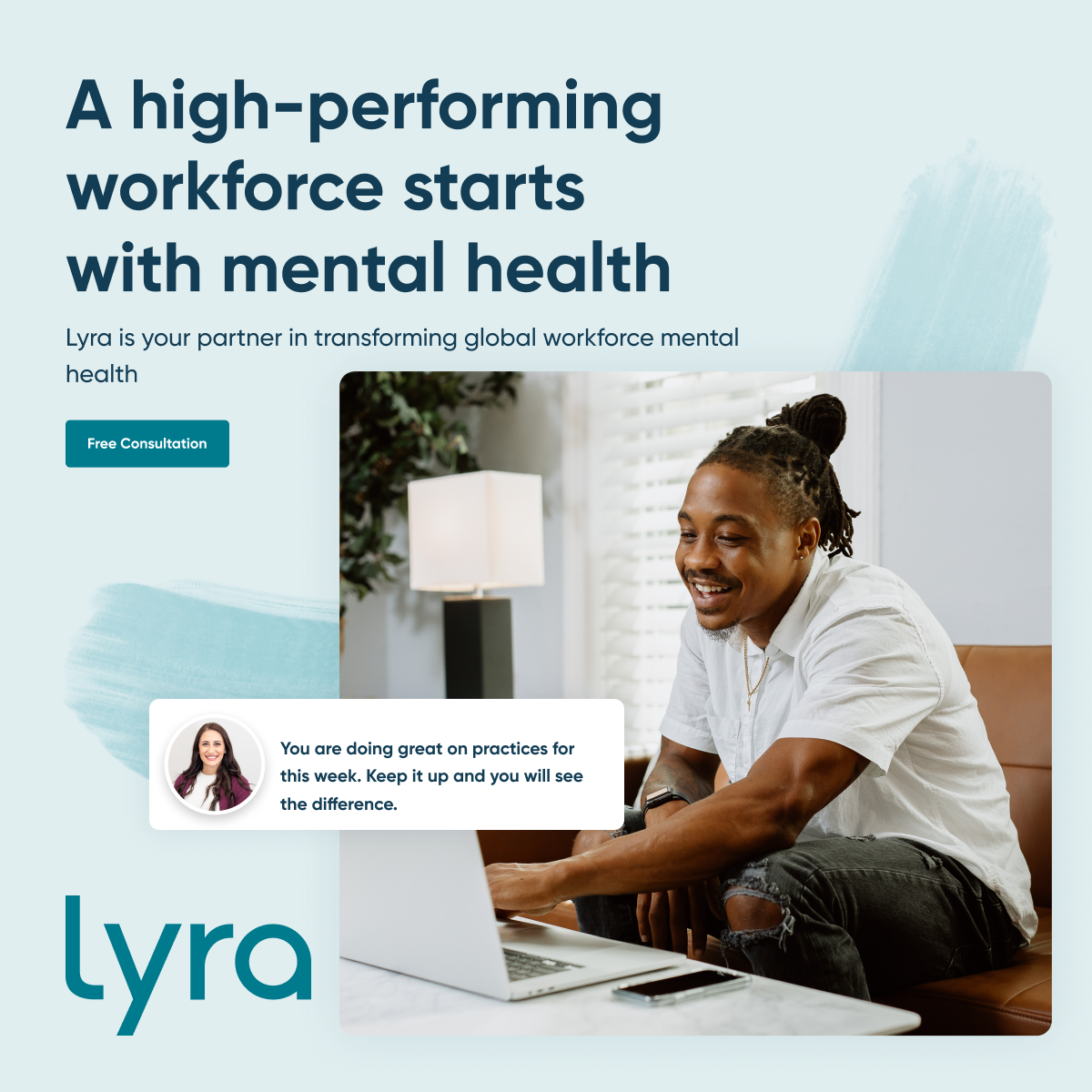
Lyra Health Web Redesign
Challenge
Lyra Health approached us to elevate key areas of their website and strengthen how their brand showed up across digital surfaces. While their existing identity was established, it lacked the depth, flexibility, and emotional resonance needed to communicate Lyra’s value clearly across homepage, About, and internal content pages. The challenge was to expand their brand expression, improve clarity of storytelling, and design pages that reflected Lyra’s leadership in mental-health care for employers and individuals.
Solution
Our team began by developing a series of mood boards and brand exploration paths, each presenting a different way to evolve Lyra’s existing system while staying true to core elements. These directions pushed the brand in areas of color, typography, illustration style, layout systems, photography, and emotional tone.
Once aligned on a direction, we:
Redesigned the homepage to better articulate Lyra’s value proposition, customer outcomes, and platform strengths
Created a refreshed About page featuring clearer hierarchy, more human storytelling, and a stronger sense of trust and credibility
Built internal design components and layout templates that extended the updated brand expression into a scalable system
Streamlined content blocks and UI patterns to ensure consistency across multiple teams and touchpoints
Improved the visual hierarchy and messaging flow to better serve multiple audiences: employers, members, and clinical partners
The final designs expanded Lyra’s brand expression while improving the usability and structure of core pages.
Results
The redesigned pages and expanded brand system gave Lyra a more contemporary, trustworthy, and emotionally resonant digital presence. Key outcomes included:
A more scalable design system that extended beyond the initial homepage and About page
Clearer narrative flow that better communicated Lyra’s story, differentiation, and impact
More polished, premium visual expression aligned with their leadership position in mental-health care
Stronger internal alignment across teams using the new components and visual language
Improved readiness for future growth with templates and systems that enabled faster, more consistent execution